Tea App Breach Exposes Sensitive Data
By Jason V. | 3/1/2026
The Tea app positioned itself as a women-only dating advice space — built around privacy and verification.
In July 2025, that promise collapsed.
Tens of thousands of images and more than a million private messages were exposed, showing just how quickly a fast-moving app can fail when security doesn’t keep pace with growth.
This wasn’t just a technical incident.
It was a trust failure.
What Happened?
In July 2025, Tea suffered a major data breach¹.
Reports indicate:
72,000 images leaked, including roughly 13,000 selfies and photo IDs submitted for identity verification, along with 59,000 images from posts, comments, and messages²
More than 1.1 million private messages exposed, many containing deeply personal discussions involving abortion, infidelity, sexual assault, and other sensitive topics³
Some of this data reportedly circulated on public forums such as 4chan².
When verification images and intimate conversations surface publicly, the consequences extend far beyond reputational damage. The potential for harassment, doxxing, and real-world harm becomes immediate.
Why AI-Driven Development (“Vibe Coding”) Made It Worse
Security analysts have pointed to a broader issue: “vibe coding.”
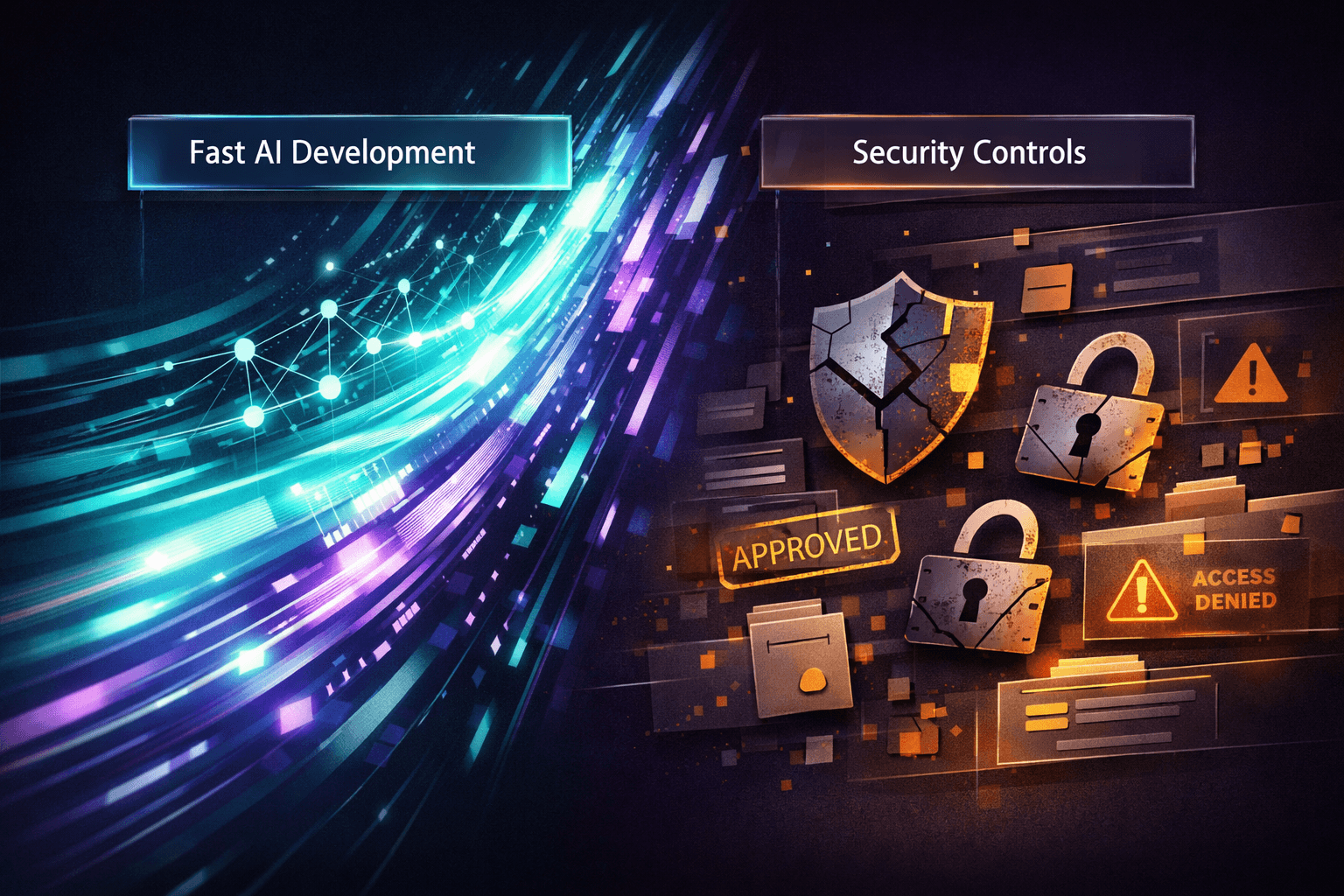
The term refers to rapid, intuition-driven development — often accelerated by AI tools — where features ship quickly but security architecture lags behind⁴.
In Tea’s case, reporting suggests:
The app promised to delete ID documents after verification — but retained them in legacy systems
Basic authentication and encryption controls were reportedly insufficient
Development velocity outpaced structured security review
AI-assisted coding tools can generate features quickly. But they don’t automatically generate secure architecture.
Speed is not a substitute for governance.
As startups lean harder into AI-assisted development, the gap between product velocity and security maturity becomes a measurable risk.
Legal Fallout + Lessons Learned
The consequences moved quickly.
At least ten class-action lawsuits were reportedly filed by August 2025⁵
Legal experts note that privacy policy statements — such as promises to delete verification data — may create consumer protection liability if not enforced⁶
Privacy policies aren’t marketing copy. They are legal commitments.
When an organization promises deletion, encryption, or secure storage, courts may treat that as a binding representation.
This breach highlights a hard truth:
Good intentions do not mitigate negligent implementation — especially when handling deeply personal user data.
What Went Wrong — and Why It Matters
| What Went Wrong | Why It Matters |
|---|---|
| Fast development without security controls | Massive exposure of sensitive data |
| Privacy policies not technically enforced | Loss of user trust + legal exposure |
| Storage of verification IDs in legacy systems | Increased impact severity |
| Highly personal conversations exposed | Real-world safety risks for users |
Users shared private moments with the expectation of protection.
Instead, they were put at risk.
When the data involved includes identity documents and vulnerable conversations, the harm isn’t abstract.
Final Thoughts
The Tea breach isn’t just about one app.
It’s about what happens when:
AI accelerates development
Security architecture is an afterthought
Privacy policies overpromise
Data governance is loosely enforced
The industry is moving fast.
Security, compliance, and user safety have to move faster.
Otherwise, we’ll keep seeing the same pattern: growth first, breach second.
Key Terms
Vibe Coding – Rapid, AI-assisted application development often driven by speed over structure
Legacy System – Outdated infrastructure that may lack modern security controls
Class-Action Lawsuit – A lawsuit filed collectively by multiple plaintiffs over the same issue
Data Broker – A company that collects and sells personal information
Data Exfiltration – Unauthorized transfer of data out of a system
📚 Sources
- Tea's data breach shows why you should be wary of new apps — especially in the AI era. Business Insider, August 4, 2025.
- Women's dating app Tea reports 72,000 images stolen in security breach. Reuters, July 26, 2025.
- Tea Dating Advice app has users’ private messages disclosed. Malwarebytes, July 29, 2025.
- Beyond the Vibe: The Dangers of Vibe Coding. Medium, July 30, 2025.
- Tea (app) – Wikipedia. Wikipedia, August 2025.
- The Importance of App Privacy and Security. Lexology, August 20, 2025.